HVAC Maintenance in Fresno: What to Do & When
HVAC Maintenance in Fresno: What to Do and When to Do It
47 days. That’s roughly how many days per year Fresno hits triple digits. Not “gets warm” – triple digits. If your AC goes down during one of those stretches, you’re looking at three or four days before anyone can get to you, and that’s during a normal summer. A bad one? Longer.
We work on HVAC systems across Fresno and Clovis, and every single summer we’re fielding the same calls. Someone skipped their spring tune-up. The system ran fine all May and most of June. Then late July hit and something gave out. These aren’t hard cases to solve – usually a refrigerant issue or a capacitor that was already showing its age – but by the time we get there the house has been hot for two days.
A little maintenance earlier in the year would have avoided most of it.
Why Fresno Is Harder on HVAC Than Most Places
Fresno’s cooling season runs long. June, July, August, and a good chunk of September where temperatures regularly stay above 90. Your system is logging serious hours. On top of that, you’ve got agricultural dust off the valley floor, spring pollen from the San Joaquin bloom, and enough airborne particulate that filters clog up noticeably faster than in most cities.
We’ve also seen more corrosion on outdoor condensers here than in most parts of California. Something about the combination of heat, dust, and irrigation moisture in the air does a number on the equipment over time.
Spring: Your One Non-Negotiable
Get your AC serviced in March or April. That’s it. If you do one thing for HVAC maintenance in Fresno, that’s the one.
A good Fresno AC tune-up checks refrigerant charge, cleans the evaporator and condenser coils, tests the capacitors and contactors, clears the condensate drain line, and confirms thermostat calibration. Every one of those items shows up as a reason for a breakdown call in summer. Refrigerant gets low over time – the coil ices over. The capacitor wears out – the system runs but doesn’t cool. The condensate drain clogs – water backs up and the system shuts down. None of these are dramatic failures. They’re all things a tune-up catches.
Change your filter before pollen season. A MERV 11 makes a real difference in the Central Valley, especially if anyone in the house has asthma.
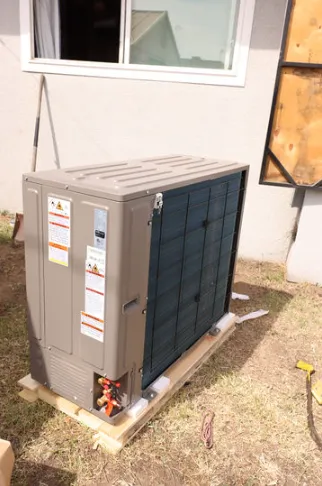
Check the outdoor condenser in May too. Clear away anything that’s grown or blown up around it over winter, give it a gentle rinse with a hose, and look for physical damage. Takes 20 minutes.
Summer: The Warning Signs People Ignore
Monthly filter changes through June, July, and August. Not every couple of months. Monthly. The dust and heat load here is real.
When the system is running, actually listen to it occasionally. A healthy system doing its job at 105 degrees sounds different from one that’s struggling. Extended run cycles where the house never quite reaches setpoint, ice forming on the refrigerant line running into the air handler, rattling or vibration you didn’t hear before, a utility bill that jumped without a change in usage. Any of those, pick up the phone. Mid-August is not the time to wait and see.
Fall: Don’t Forget the Furnace
Fresno winters are mild enough that people don’t think much about their furnace until they need it. December nights drop into the 30s regularly. A furnace that’s sat idle since March without any attention is one that might not fire up cleanly when you want it to.
Fall furnace service covers the heat exchanger, burner operation, ignition system, and carbon monoxide testing. The heat exchanger is the one that actually matters for safety. A crack in it can push CO into the living space without triggering an alarm right away. That’s not a small thing.
Swap in a fresh filter before heating season starts, and test your smoke and CO detectors while you’re thinking about it.
The Basics That Don’t Cost Anything
Don’t block supply registers or return vents with furniture. Keep a clearance around your outdoor unit. Set a consistent thermostat schedule rather than big swings up and down through the day. These things matter for equipment life more than people give them credit for.
When It’s Time to Stop Repairing
A system over 15 years old that needs a repair quote over $1,500 is usually a candidate for replacement rather than repair. Same situation if you’re still running R-22 refrigerant – it was phased out in 2020 and recharging an R-22 system now costs enough that the math rarely works out. A newer high-efficiency unit typically cuts cooling costs by 30 to 40 percent. In a Fresno summer, that’s not a small number.
Book Your Service with Borgen’s Construction
Borgen’s Construction Inc. handles HVAC maintenance, repairs, and full system replacement across Fresno and Clovis. Maintenance plans include a spring AC tune-up, a fall furnace tune-up, priority scheduling, and filter change reminders.
Call (559) 399-5014 or visit borgensconstructioninc.com to get on the schedule before the season does.